
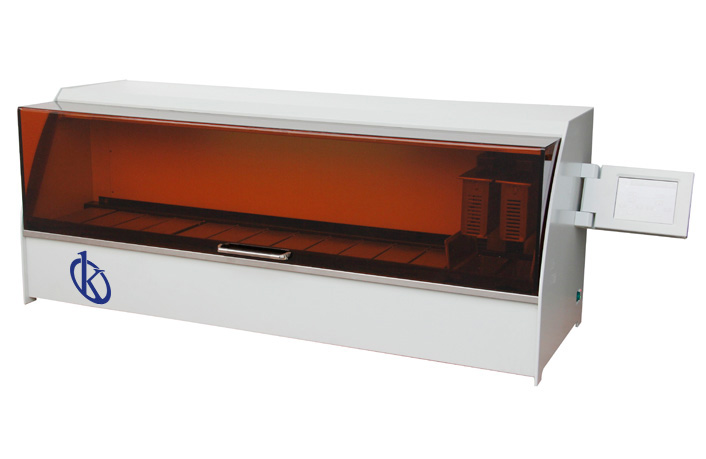
In the realm of histopathology, precision and efficiency in tissue processing are paramount. Labs and researchers turn to advanced technology to ensure optimal results. Two notable products in the market are the Fully Automated Tissue Processor YR432-1 by Kalstein and the Tissue-Tek VIP 6 AI Paraffin Tissue Processor from Sakura. Both these processors promise cutting-edge technology, yet they differ in several aspects, each catering to specific user needs.
The Fully Automated Tissue Processor YR432-1 by Kalstein embodies innovation and user-centric design. This processor is engineered to automate and optimize the process of tissue preparation, offering convenience and consistency. In contrast, the Tissue-Tek VIP 6 AI from Sakura leverages artificial intelligence for precision and improved throughput, integrating advanced software to adapt to varying tissue types.
| Features | Fully Automated Tissue Processor YR432-1 | Tissue-Tek VIP 6 AI Paraffin Tissue Processor |
|---|---|---|
| Automation Level | Fully Automated | High AI Integration |
| Technology | User-Centric Design | AI-Driven |
| Consistency | Highly Consistent Results | Adaptive Consistency |
| Software | Kalstein Advanced Software | Advanced AI Software |
How They Work
The Fully Automated Tissue Processor YR432-1 operates with a streamlined approach to tissue fixation, dehydration, clearing, and impregnation, automated to reduce human error and improve reproducibility. The device focuses on maintaining tissue integrity and quality during processing, aided by customizable protocols suitable for various tissue types.
Similarly, the Tissue-Tek VIP 6 AI employs AI technology to enhance its processing phases. It adjusts its parameters based on tissue characteristics, ensuring precision. The AI component aids in real-time monitoring and adjustments, providing an intelligent approach to tissue processing.
Purpose
Both processors serve the essential function of preparing tissue samples for histological examination. They are crucial in medical and research settings, where detailed tissue analysis is necessary for diagnosis and research discoveries. By automating these processes, they save time and manpower while enhancing accuracy and efficiency.
Types
Generally, tissue processors can be categorized based on automation level and intended application. Both the Kalstein and Sakura models represent fully automated options designed for high throughput and error reduction. Their differences lie in the technological approach—Kalstein emphasizes user-friendly design, whereas Sakura integrates AI for adaptive processing.
Market Pricing
In the market, automated tissue processors can range significantly in price depending on functionality, brand, and technological complexity. The Fully Automated Tissue Processor YR432-1 is competitively priced within mid to high-market brackets, ensuring accessibility while maintaining advanced features. The Tissue-Tek VIP 6 AI, with its AI capabilities, tends to be on the higher end of the price spectrum, reflecting its advanced technological integration.
Frequently Asked Questions
What are the power requirements for these processors?
Both processors are designed to work with standard laboratory power outlets. However, it is essential to refer to the user manual for specific voltage and power consumption details.
Are the processing protocols customizable?
Yes, both devices allow for customization of protocols, although the ease and extent of customization may vary.
How does maintenance differ between the two?
The maintenance requirements are relatively straightforward, though Kalstein’s device is praised for user-friendly design, potentially simplifying routine maintenance tasks.
Advantages and Disadvantages
Fully Automated Tissue Processor YR432-1: Its advantages include superior user-centered design, ease of use, and competitive pricing. It provides reliable performance, tailored protocols, and minimal learning curve. The downside could be its lack of the advanced AI technology that some users seek.
Tissue-Tek VIP 6 AI: The integration of AI provides adaptive and precise processing, a significant advantage for complex tasks. However, this comes at a higher price and potential complexity in operation for new users.
Practical Field Use
In real-world applications, these processors enhance laboratory efficiency and accuracy. The YR432-1 is often favored for its robustness in various settings, especially where user input and engagement are prioritized. On the other hand, the VIP 6 AI is preferred in environments where advanced automation can compensate for human resource limitations.
Recommendations
For optimal use, it is recommended to consistently update and maintain each unit according to the manufacturer’s guidelines. For the Kalstein model, taking advantage of the Kalstein Plus platform for streamlined operations can further enhance user experience and service efficiency.
If you are exploring the options for a top-tier tissue processor, consider reaching out to Kalstein today. You can easily request or generate an automatic quote via their Kalstein Plus platform to find the ideal solution tailored to your laboratory needs.
If you are looking for a fusion of innovation and quality, you have come to the right place. At Kalstein, we offer you the luxury of exploring our exclusive catalog of laboratory equipment. We manufacture each piece of equipment with a level of excellence. Our online purchasing channels, intuitive and agile, are designed for your convenience, ensuring the friendliest prices. Do not hesitate any longer, we bring life to science, it’s time to be part of our community. https://kalstein.com.br/product/fully-automated-tissue-processor-yr432-1/.